Hook: The Match That Became a Memory:
Tennis fans came expecting greatness.
What they witnessed was something deeper than humanity.
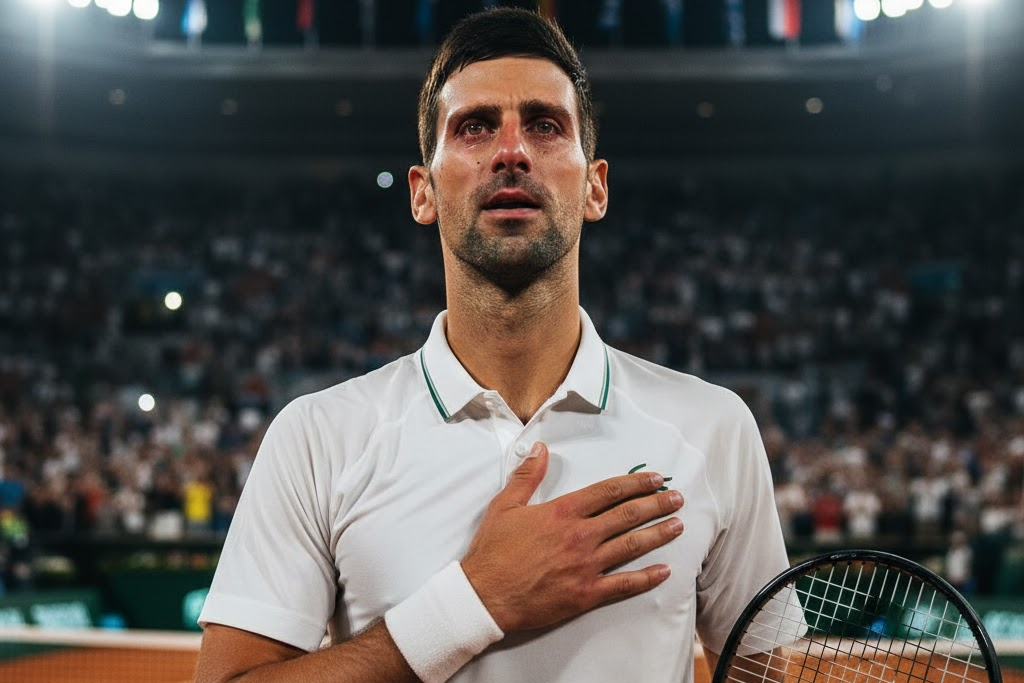
After his victory in the ATP Finals in Athens, Novak Djokovic paused not to celebrate, but to remember.
With tears welling and his voice trembling, he offered a heartfelt tribute to his late coach, the man who had guided him through his early battles and built the foundation for his career.
In that moment, under the Greek lights, Djokovic reminded the world that even the fiercest champions carry stories of love, loss, and legacy.
For decades, Novak Djokovic has been known for precision, resilience, and almost robotic dominance on the court.
But behind that armor of perfection lies a man shaped by struggle, faith, and mentorship.
His tribute wasn’t rehearsed, it was raw, spontaneous, and human.
It turned a match into a moment of global empathy.
Crowds fell silent. Cameras zoomed in. The world leaned closer.
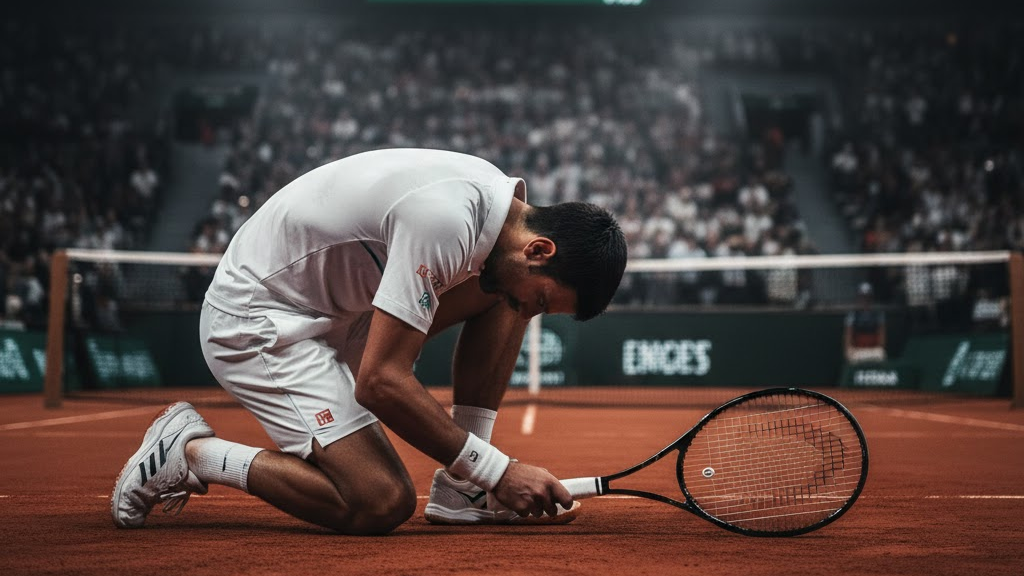
It’s these flashes of authentic emotion that remind us why sport transcends competition, it’s storytelling through sweat and soul.
The Power of Vulnerability in a Brand-Driven World:
In the modern sports economy, performance earns attention, but vulnerability builds connection.
When Djokovic opened up about his grief, it wasn’t a press tactic. It was a human moment in an era that often feels over-scripted.
And that vulnerability became brand gold.
Why? Because emotion scales faster than marketing.
- Fans shared the clip across every platform millions of views in hours.
- Brands associated with Djokovic saw positive sentiment spikes.
- Even rival players and commentators joined in the wave of admiration.
Beyond the Trophy !
This wasn’t just a win on court, it was a win in culture.
In branding terms, authentic emotion = amplified loyalty.
It’s the ultimate intangible that no campaign budget can buy.
The Psychology of Connection: When Greatness Feels Human
Here’s the paradox of dominance: the better an athlete gets, the harder it becomes for people to relate.
Yet, Djokovic’s tribute cut through that barrier.
Fans didn’t see a champion.
They saw a son, a student, a man saying thank you to the one who helped him become who he is.
That’s the kind of emotional currency that keeps fans loyal long after the matches are over.
Because in sports as in life people don’t connect with perfection.
They connect with honesty wrapped in greatness.
Global Impact: The Moment That Traveled Beyond Tennis
Within minutes, the clip of Djokovic’s tribute trended worldwide, translated into over 20 languages, covered by every major outlet, and shared by fellow athletes across disciplines.
That’s the global reach of human storytelling.
It transcends borders, sports, and cultures.
In Serbia, it became a national moment of pride.
In Greece, it became a symbol of sportsmanship.
And across the world, it became proof that emotion is the universal language of greatness.
Lessons for Leaders, Athletes, and Brands
- Emotion builds empires. People remember how you make them feel, not just what you achieve.
- Legacy isn’t taught, it’s felt. Greatness without gratitude is hollow.
- Authenticity converts faster than advertising. The real moments define the brand, not the planned ones.
- In leadership, humility is magnetic. It pulls people closer while power often pushes them away.
Final Whistle: The Legacy Within the Legacy
Djokovic’s moment in Athens wasn’t about a coach, it was about connection.
It was about the invisible bond that turns talent into legacy.
For all his records and titles, perhaps his greatest impact came in that quiet pause after victory, a champion showing that behind every success story is someone who believed first.
Because sometimes, the most powerful statement in sports isn’t a roar of triumph.
It’s a whisper of gratitude.
“In a world obsessed with perfection, Novak Djokovic proved that emotion is the most powerful serve of all.”
 Move Elevate
Leave a comment