

The world’s biggest sporting event is coming home.
From June 11 to July 19, 2026, the FIFA World Cup returns to North America, with the United States hosting a record number of games across 11 major cities. This tournament marks a historic expansion, featuring 48 teams for the first time, creating a month-long global celebration unlike anything seen before.
The excitement is already building, and with the scale of venues, tourism, culture, and technology involved, the 2026 World Cup is expected to become the largest sporting event in human history.
This moment isn’t just about football. It’s about global connection, fan culture, and how sport can unite millions across borders.
A Tournament Spread Across America
The U.S. will serve as the main hub of the World Cup, hosting the majority of matches. Games will unfold across iconic cities, amplifying local flavor, fan energy, and modern stadium design.
The 11 U.S. host cities include:
- New York/New Jersey
- Los Angeles
- Dallas
- San Francisco Bay Area
- Atlanta
- Houston
- Seattle
- Boston
- Philadelphia
- Miami
- Kansas City
Each host city brings its own distinct identity, from the coastal flair of Miami to the tech-powered energy of San Francisco, to the football-rich culture of Dallas and Kansas City.
The result:
A nationwide festival of sport and culture.
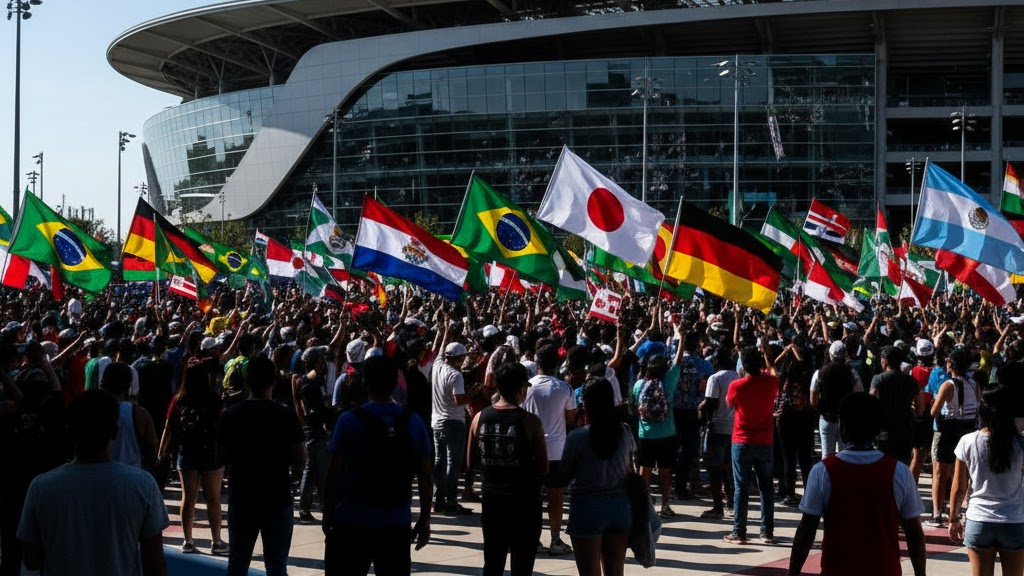
Why the 2026 World Cup Matters
1. The Largest World Cup Ever Held
For the first time, the tournament expands from 32 to 48 teams, meaning more matches, more nations participating, and more global viewership. This shift brings new countries onto the world stage and boosts competition.
2. A Massive Boost for Travel, Tourism, and Culture
Analysts estimate that the 2026 World Cup could generate over $10 billion in economic impact across North America. Hotels, restaurants, stadiums, local businesses, transit systems, everything will feel the surge.
The slogan “The Journey Starts Here”, championed by travel partners like VOMOS, resonates strongly: millions of fans will travel across the U.S., experiencing different regions, cultures, and cities through the lens of the world’s most beloved sport.
3. A Technological and Broadcast Revolution
Expect AI-powered stadium experiences, advanced digital ticketing, real-time global streaming, and enhanced security systems. The 2026 World Cup will push boundaries on how sports events are delivered and experienced.
4. A Surge in U.S. Soccer Popularity
Soccer in America is on a steep rise, from MLS expansion to massive youth participation. A home World Cup could be a turning point that elevates the sport’s mainstream appeal in the United States for decades.
5. A Global Moment of Unity
At a time when the world feels divided, events like the World Cup bring nations together through shared passion. Millions gather, cheer, celebrate, and connect, reminding us why sport remains a universal language.
The Road Ahead: Anticipation Builds
With the countdown underway, preparations in host cities are accelerating, stadium upgrades, transportation improvements, fan zones, and international collaborations.
Fans worldwide are already planning routes, booking stays, and lining up to witness history.
June 11, 2026, will mark the start of a World Cup that promises to be bigger, louder, and more unifying than any tournament before it.
The world will be watching.
And America will be ready.


 Move Elevate
Leave a comment