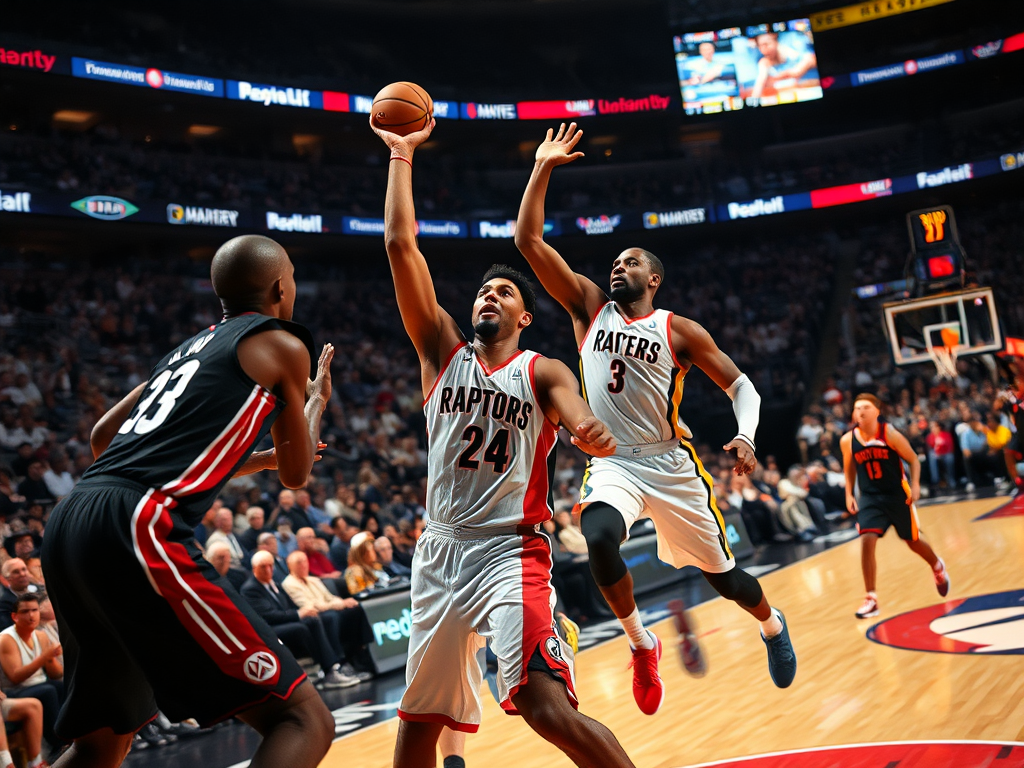
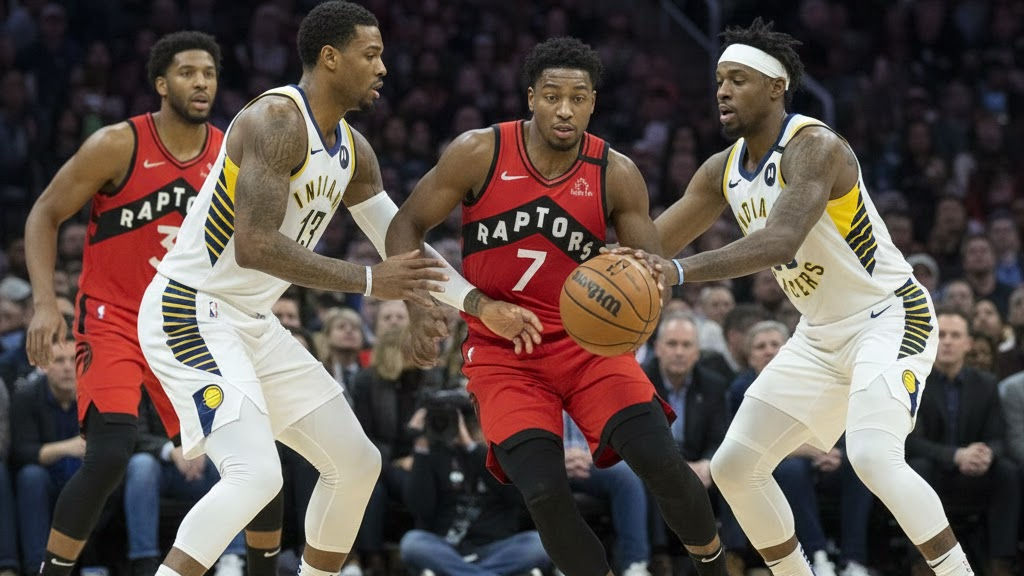
The Toronto Raptors earned a gritty and hard-fought 97–95 win over the Indiana Pacers today, closing out one of the most competitive and dramatic games of the week. Both teams entered the matchup with something to prove, the Raptors looking to strengthen their mid-season surge, and the Pacers determined to build consistency in a crowded Eastern Conference landscape. What followed was a basketball chess match, where defense, composure, and tactical execution defined every possession.
This wasn’t a flashy high-scoring showdown, nor was it a game dominated by one superstar performance. Instead, it was a grind-it-out battle where both teams fought for every point, every rebound, and every inch of momentum until the final buzzer. The Raptors, through a combination of smart adjustments, timely shot-making, and unwavering defensive discipline, found the edge, but only by the narrowest of margins.
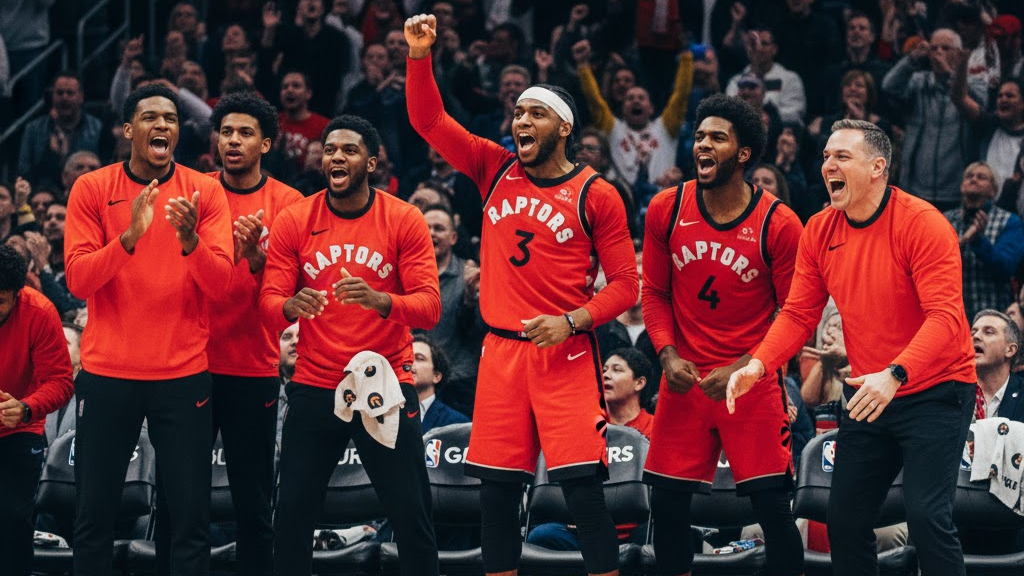
First Quarter: A Fast Start Fueled by Ball Movement
The opening 12 minutes set the tone for the kind of competitive basketball that would define the remainder of the night. The Pacers came out aggressive, pushing the tempo early and running crisp pick-and-roll sets that forced Toronto’s defense to move and rotate. Indiana’s backcourt was particularly sharp in the opening frame, orchestrating the offense with pace and confidence.
The Raptors, however, countered with their own brand of efficient basketball. They spaced the floor well, relied on quick drive-and-kick actions, and punished the Pacers whenever they were late to rotate. Toronto’s perimeter shooting kept the score tight, preventing Indiana from building a significant lead.
Both teams shot well in the opening quarter, and neither was able to generate separation, a sign of the evenly matched contest that was to come.
Second Quarter: Defense Tightens on Both Ends
As the game moved into the second quarter, both teams increased their defensive intensity. Toronto began switching more aggressively on the perimeter, forcing Indiana into more difficult mid-range attempts. The Raptors’ help defense was sharp, particularly around the rim, where they consistently contested and altered shots.
Indiana, on the other hand, did an excellent job of disrupting the Raptors’ rhythm. They jumped into passing lanes, challenged shooters, and used physicality to limit Toronto’s scoring runs. Their communication on defense stood out, especially during sequences where Toronto attempted to attack off-ball screens.
Offensively, both teams slowed down. It wasn’t due to inefficiency alone, but rather a result of well-constructed defensive game plans. By halftime, the score reflected the grind of the second quarter, close, competitive, and up for grabs.
Third Quarter: Raptors Make the First Real Push
The third quarter marked the first significant momentum shift in the game. Toronto came out with renewed purpose, emphasizing ball pressure, transition opportunities, and high-percentage looks in the paint. Their defensive adjustments were immediately noticeable, Indiana struggled to generate the same clean looks they had in the first half.
Toronto’s offense also became more fluid. Their spacing improved, the ball moved faster, and key role players stepped up during this stretch. Whether it was hustle plays, timely rebounds, or opportunistic scoring, the Raptors’ second unit played a vital role in gaining an edge.
The Pacers, meanwhile, found themselves fighting against stagnation. Toronto’s defensive pressure forced them into several rushed possessions, leading to misses that allowed the Raptors to control pace. However, despite the Raptors’ push, the Pacers remained within striking distance heading into the final quarter.
The scoreboard didn’t show a blowout, it showed a battle on the brink of breaking open.
Fourth Quarter: A Stunning Finish Filled With Drama
If the first three quarters were defined by tactical execution, the fourth quarter was pure heart, determination, and clutch performance on both sides.
The final 12 minutes were neck-and-neck from start to finish. No team led by more than a few points. Every basket felt like a momentum swing, every defensive stop felt like it could decide the outcome.
Toronto’s Late Execution
The Raptors made the plays that mattered most:
- A clutch mid-range jumper to reclaim the lead
- A perfectly timed drive leading to a tough finish
- Two defensive stops in the final minute
- Smart clock management
Their experience and discipline showed, especially as the pressure rose.
Indiana’s Response
The Pacers refused to fold. They hit big shots of their own, fought for offensive rebounds, and delivered strong defensive sequences. With under a minute to go, the game truly felt like it could belong to either side.
But with the game on the line, Indiana’s final possession came up short. A contested jumper in the closing seconds bounced off the rim, sealing the Raptors’ win.
Key Factors Behind Toronto’s Victory
1️ Clutch Defense
In the final 30 seconds, Toronto’s defense was suffocating. They switched perfectly, cut off passing angles, and forced a difficult final shot.
2️ Balanced Scoring
The Raptors didn’t rely on just one player. Their scoring was spread across the lineup, making them harder to guard late in the game.
3️ Composure Under Pressure
Toronto played with patience, avoided rushed shots, and kept turnovers minimal in clutch time.
4️ Bench Contributions
Several non-starters delivered crucial plays that maintained Toronto’s momentum throughout the game.
What This Win Means
For the Raptors
This win strengthens their claim as one of the most resilient mid-tier teams looking to climb the standings. Winning tight games is essential in the long NBA season, and tonight’s victory proves they are developing the toughness and discipline required for postseason contention.
For the Pacers
The Pacers competed with great energy and execution, but their inability to close the final possession cost them. This loss is not a setback in effort, but a reminder of the importance of late-game structure. Indiana has the pieces, now they need the finishing touch.
Conclusion :
The Raptors’ 97–95 win over the Pacers was not just a regular-season victory, it was a display of composure, defensive toughness, and the ability to rise to the moment. Games like this build identity. They shape confidence. And they reveal which teams can stay locked in under pressure.
For Toronto, the message is clear:
They can close.
They can compete.
And they are building something real.
For Indiana, the takeaway is equally important:
They’re close, very close, but must sharpen the details to turn narrow losses into meaningful wins.

 Move Elevate
Leave a comment