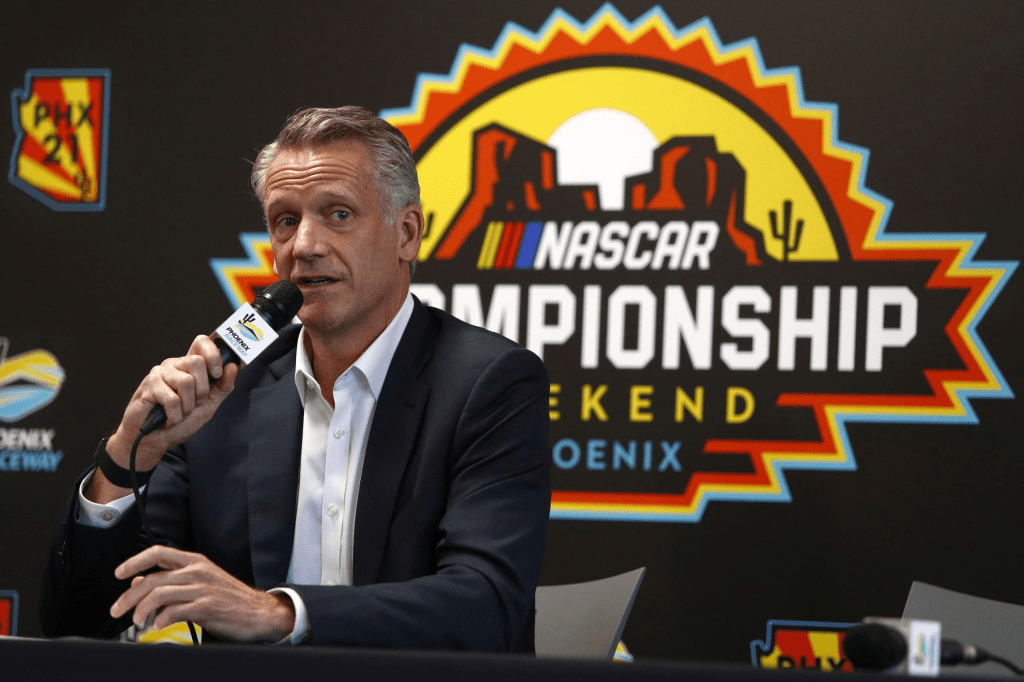
Just weeks before engines roar to life for a new season, NASCAR has been rocked by a stunning leadership change. Commissioner Steve Phelps has resigned, sending shockwaves through the motorsports world and sparking intense debate about the sport’s direction, governance, and credibility.
At the center of the controversy is an ongoing legal dispute involving 23XI Racing, the high-profile team co-owned by basketball legend Michael Jordan. While NASCAR has not officially linked Phelps’ departure to the lawsuit, the timing has fueled speculation across fan circles, media outlets, and team garages. For many, the resignation feels less like coincidence and more like the fallout of mounting pressure behind closed doors.
Phelps’ tenure was defined by bold changes expanding NASCAR’s commercial footprint, modernizing media deals, and pushing diversity and inclusion initiatives. Yet, his exit highlights the growing tension between NASCAR leadership and team owners, particularly around revenue sharing, governance transparency, and competitive fairness. The 23XI Racing case has become symbolic of these deeper structural cracks, raising questions about whether NASCAR’s current model truly serves teams and stakeholders in the long run.
This sudden shake-up also places NASCAR at a crossroads. With the season fast approaching, stability matters not just for sponsors and broadcasters, but for fans who crave clarity and confidence in the sport they love. Interim leadership now faces a critical task: steady the ship, reassure partners, and prove that NASCAR can evolve without losing its competitive soul.
As the dust settles, one thing is clear this isn’t just a personnel change. It’s a defining moment that could reshape how NASCAR is run for years to come. The races may start soon, but the real battle for NASCAR’s future is already underway.


 Move Elevate
Leave a comment