
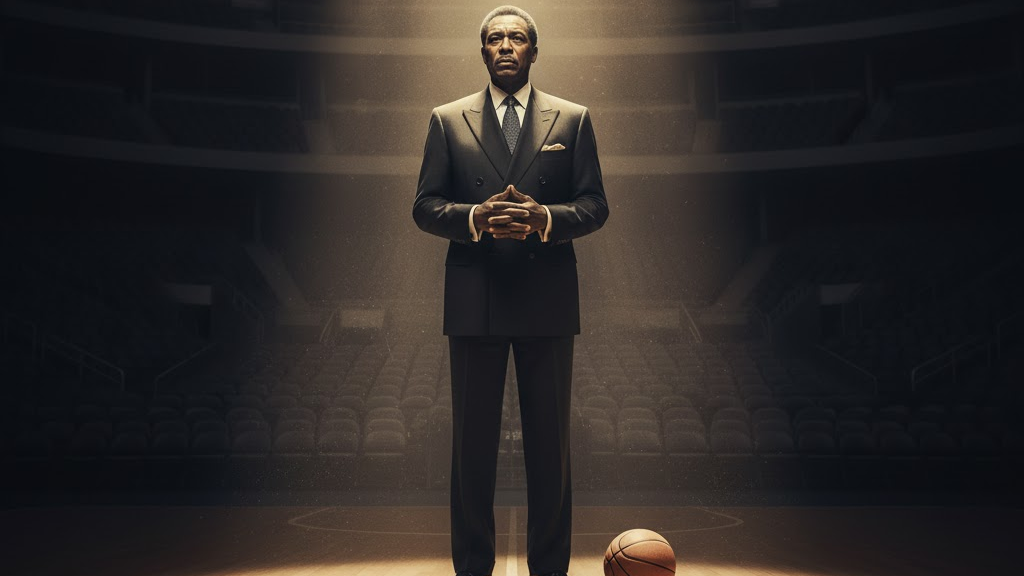
Veteran coach and Hall of Famer Lenny Wilkens, one of basketball’s most influential figures has passed away at the age of 88.
His death marks the close of an era, not just for basketball purists but for anyone who believes that sport can be a mirror to life, a medium for character, leadership, and purpose.
Wilkens was not merely a man of the game; he was the architect of a philosophy, a living embodiment of what it meant to build something that outlasts time, statistics, and even trophies. His name, spoken softly in coaching circles and with reverence in locker rooms, stood for class, discipline, and humanity.
A Legend Remembered: The Man, The Player, The Coach
Lenny Wilkens’ life in basketball began humbly, yet it unfolded like a masterclass in perseverance and wisdom.
Born in Brooklyn, New York, in 1937, Wilkens grew up in a community that was tough but tight-knit, a place that taught him resilience, compassion, and the value of quiet confidence.
After starring at Providence College, he was drafted into the NBA in 1960 by the St. Louis Hawks, beginning a playing career that would span 15 seasons. Wilkens wasn’t the flashiest player — he didn’t rely on explosive athleticism or showy theatrics, but he was cerebral, poised, and profoundly effective.
He became known as a “coach on the court”, orchestrating plays, reading defenses, and elevating teammates with unspoken chemistry. That understanding of the game’s rhythm would later define his coaching philosophy.
During his playing career, Wilkens made nine All-Star appearances and was named All-Star Game MVP in 1971. His stats over 17 points and 7.7 assists per game are impressive, but his true gift was his ability to make everyone around him better. That quality would transcend his years as a player and become the hallmark of his coaching career.
The Thinker on the Sidelines: A Coach Who Led with Calm:
Transitioning from player to coach was almost inevitable for Wilkens.
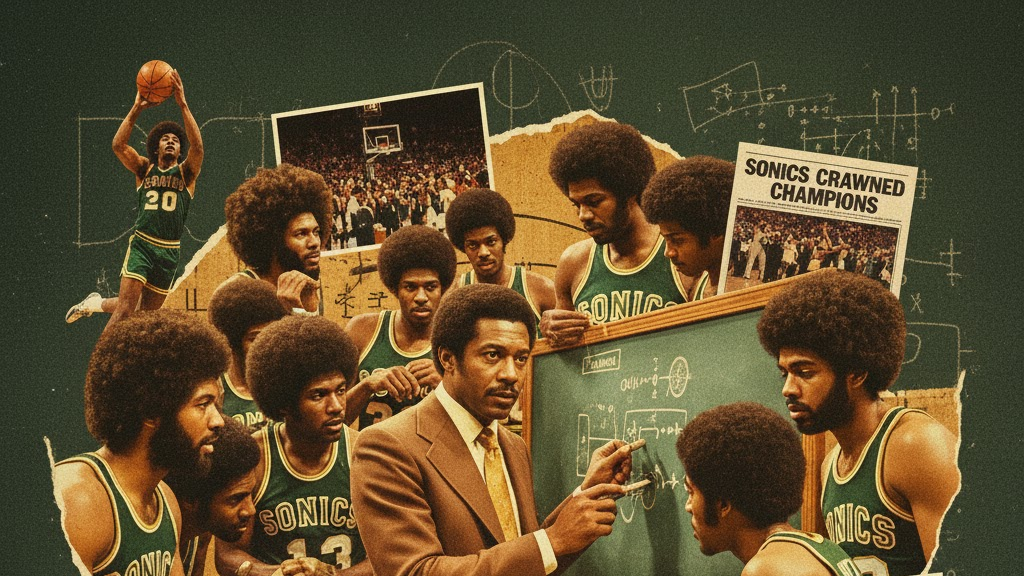
He began his coaching journey in 1969 with the Seattle SuperSonics, while still an active player one of the rare “player-coaches” in NBA history. His leadership style was defined by composure and empathy, a stark contrast to the fiery, authoritarian methods common in the era.
He didn’t yell. He didn’t demand obedience. He invited trust.
Wilkens believed basketball mirrored life that success wasn’t about domination but cooperation.
His mantra was simple:
“You succeed when everyone contributes, when everyone feels valued.”
That philosophy shaped his teams into disciplined, selfless units that moved like symphonies, not just collections of stars.
His crowning achievement came in 1979, when he coached the Seattle SuperSonics to their first and only NBA Championship. That victory wasn’t built on superstardom, but on chemistry and unity players like Dennis Johnson, Jack Sikma, and Gus Williams thriving under Wilkens’ quiet guidance.
He would go on to coach multiple teams including the Cleveland Cavaliers, Atlanta Hawks, New York Knicks, and Toronto Raptors amassing 1,332 career wins, which once stood as the most in NBA history.
But for Wilkens, numbers were never the point. His success was measured not in rings, but in respect.
The Global Ambassador: Expanding Basketball’s Reach
Wilkens’ influence stretched far beyond American borders.
He was an ambassador of the game helping to popularize basketball as a universal language. His role as an assistant coach for the 1992 U.S. Olympic “Dream Team”, and later as head coach of the 1996 U.S. Olympic Team positioned him as a symbol of basketball diplomacy, someone who understood the game’s power to unite cultures.
Under his guidance, the 1996 U.S. team captured gold in Atlanta, and his approach, one emphasizing integrity, teamwork, and humility resonated around the world.
His ability to adapt, to balance the egos of global superstars while maintaining team cohesion, reflected a rare kind of emotional intelligence. Wilkens saw coaching as an act of teaching and empathy, not control.
Even in his later years, he continued to mentor young coaches and advocate for community development through his Lenny Wilkens Foundation, which raised millions for children’s health and education programs. His off-court legacy mirrored his on-court ethos, lead quietly, impact deeply.
Lessons in Leadership: The Wilkens Philosophy
Lenny Wilkens didn’t just coach basketball, he coached human beings.
In an age when coaching was often about command and fear, he brought compassion and connection. His greatest strength wasn’t tactical genius, though he had plenty of that, it was his ability to listen.
He treated players as equals, creating environments where everyone’s voice mattered. This egalitarian spirit was revolutionary for its time as a model of psychological safety long before the term became popular in management circles.
Wilkens believed that values, not just talent, determined a team’s destiny.
His approach combined the art of communication with the science of strategy. He once said:
“You don’t win by talking about winning. You win by preparing to win together.”
In today’s data-driven NBA, where analytics, algorithms, and instant gratification dominate, Wilkens’ legacy feels almost spiritual, a reminder that human connection remains basketball’s greatest advantage.
The Brand of Grace: Why His Legacy Still Matters !
In business and sport alike, brand value comes from authenticity.
Lenny Wilkens’ brand was authenticity itself, calm under pressure, ethics under temptation, humility amid greatness. His style of leadership offers timeless lessons not just for athletes but for entrepreneurs, executives, and creators:
- Lead without shouting. Influence doesn’t require volume; it requires trust.
- Build relationships before strategies. Culture beats systems every time.
- Legacy is not built in highlights. It’s built in how you make others feel.
Even in retirement, Wilkens carried himself with the quiet dignity of a statesman. He represented an older school of leadership, one where grace was power and patience was progress.
His ability to inspire without spectacle makes his legacy more relevant than ever in an era where leadership is often confused with loudness.
The Enduring Impact: Mentors, Memories, and Modern Echoes
Wilkens’ influence can be felt in countless corners of the modern NBA.
Coaches like Gregg Popovich, Doc Rivers, and Steve Kerr have all acknowledged how his composure and holistic leadership set the standard. Even younger players who never met him have grown up learning from systems and values he helped institutionalize.
He was inducted into the Naismith Memorial Basketball Hall of Fame three times, an achievement that speaks volumes:
- Once as a player
- Once as a coach
- And once as part of the 1992 U.S. Olympic “Dream Team”
That triple induction places him among the most decorated and respected individuals in the history of sports.
When people speak of Wilkens, they rarely start with stats. They start with stories of the time he comforted a player after a tough loss, or how he personally called players’ families to check in during offseasons.
These are the quiet gestures that turn a professional into a legend.
The Passing of a Giant: What the NBA Will Remember
As news spreads of Wilkens’ passing, tributes are pouring in from across the basketball world. Teams are expected to honor him with moment-of-silence tributes, and former players have already begun sharing emotional reflections on social media.
What they all share in common is a sense of gratitude for his mentorship, his kindness, and his example.
NBA Commissioner Adam Silver once described Wilkens as “the conscience of the league.”
It’s a fitting title for a man who represented everything right about the sport’s integrity, empathy, and dedication.
The NBA community, often driven by metrics and markets, finds in Wilkens’ life a powerful reminder that true greatness is defined by character, not contracts. His passing isn’t just a loss for basketball; it’s a cultural moment for reflection, a time to reconsider what leadership, legacy, and respect really mean.
What We Can Learn: Legacy as Leadership
Lenny Wilkens’ story teaches us that enduring value in sports, business, or life comes from principles that don’t age.
In every field, there’s a hunger for speed, scale, and spotlight. But Wilkens showed that the real win lies in longevity and impact.
His quiet authority, his refusal to chase fame, and his focus on people-first leadership built a legacy that will outlive every scoreboard and banner.
If the modern NBA is a global brand today built on values of teamwork, diversity, and inspiration, it owes much to the foundation Wilkens and his generation laid.
Final Reflection: The Legacy Lives On
Lenny Wilkens’ death may mark the end of an era, but his influence will never fade.
He leaves behind lessons that stretch far beyond the hardwood:
- That true leadership listens.
- That humility and success can coexist.
- That greatness built on grace never dies.
As the basketball world mourns, it also celebrates because legends like Wilkens don’t disappear. They echo.
In every timeout speech that begins with empathy, in every coach who values unity over ego, in every team that plays for each other his presence lingers.
Lenny Wilkens didn’t just shape a sport; he shaped people. And that, more than any championship or statistic, is what immortality looks like.
Rest in peace, Coach Wilkens.
Your wisdom, humility, and humanity will continue to teach us on and off the court.

 Move Elevate
Leave a comment